Tanzania Sesame Prices Normalize Following Last Season's Exceptional Rally
5 Aug 2026
Key Highlights
●Early auction prices range between TZS 2,310–2,740/kg
●Prices remain below last season's peak above TZS 4,000/kg
●Songwe leads early marketing volumes
●Global supply growth is reducing upward price pressure
●Export demand remains active for quality sesame
●Quality premiums continue to influence auction results
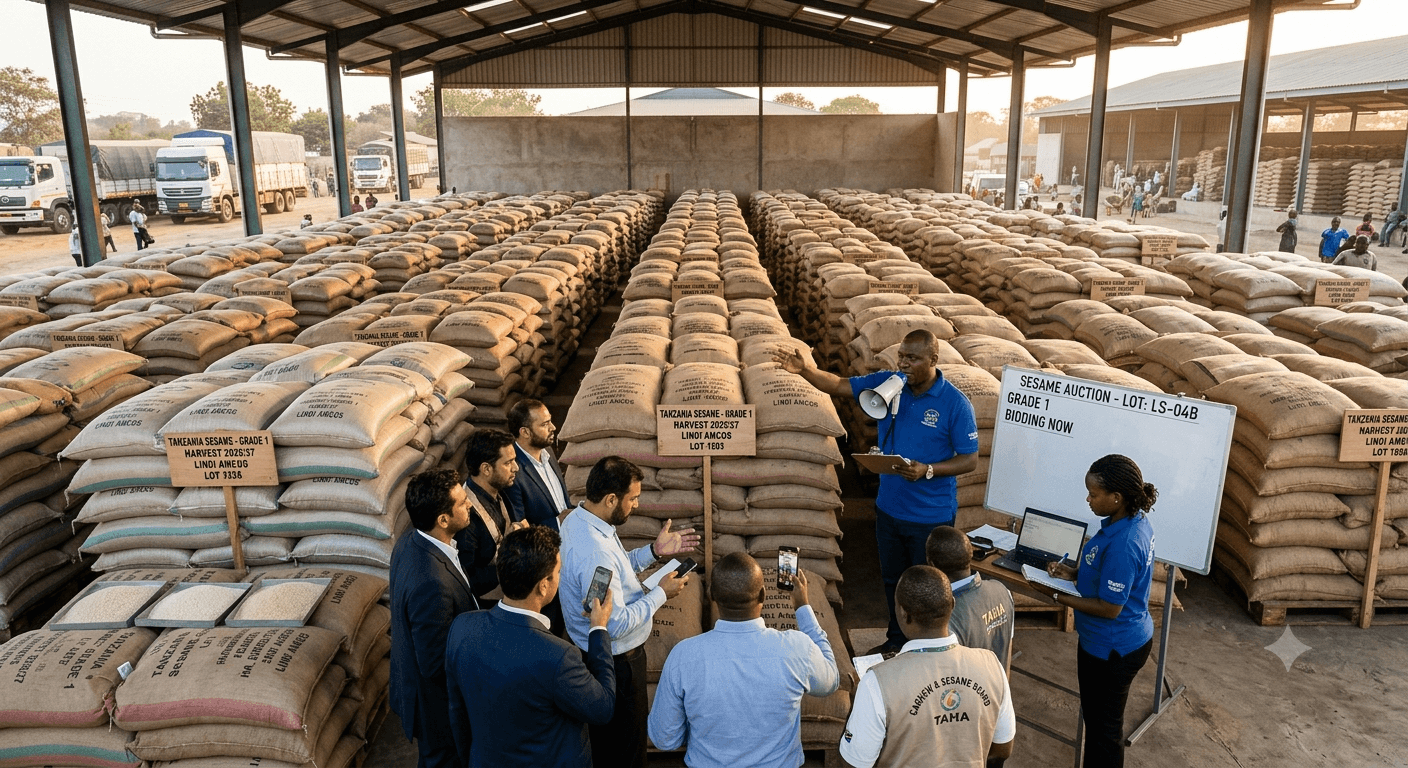
Tanzania's sesame market has entered a period of price normalization following last season's exceptional rally. Early auctions in the 2026/27 marketing season indicate that prices remain historically attractive, although they have retreated from the record highs seen a year ago as global supply improves and buyer competition becomes less aggressive.
According to auction data released by the Tanzania Mercantile Exchange (TMX) sesame prices during the current 2026/27 marketing season have generally ranged between 2,310/- and 2,740/- per kilo, depending on location, quality and buyer competition. While these prices remain attractive compared with historical averages, they are below the levels recorded during the previous marketing season when some auctions crossed the 4,000/- per kilo mark.
The difference between the two seasons highlights the cyclical nature of agricultural commodity markets. Last year’s high prices were supported by strong international demand and tighter supplies, creating favourable conditions for Tanzanian farmers. However, commodity markets rarely maintain exceptional price levels for extended periods. As supply conditions change, prices naturally adjust.
The opening auctions of the current season provide an indication of how the market is behaving. In Songwe Region, 1,923 tons of sesame were sold during the first auction, with prices ranging from 2,625/- to 2,700/- per kilo. In neighbouring Momba District, 928 tons were traded, recording an average price of 2,714.90/- per kilo, with the highest bid reaching 2,740/- per kilo.
Ruvuma Region has also recorded active participation. In Tunduru District, nearly 995 tons were sold during the first auction, with prices ranging between 2,410/- and 2,520/- per kilo, averaging 2,477/- per kilo. These figures show that while prices have declined from last season’s highs, demand for quality Tanzanian sesame remains present.
Among regions participating in early-season trading, Songwe has emerged as one of the largest contributors by volume. TMX data indicate that by the middle of the season, total sesame traded through the exchange had reached 8,665.6 tonnes, with produce sourced from regions including Songwe, Ruvuma, Tabora and Rukwa. However, the final ranking of regions by marketed volume is likely to change as more producing areas complete their auctions.
Typical market prices are projected as follows: The expected price for the 2025/26 season is TZS 3,800–4,000 per kilogram, while the expected price for the 2026/27 season is TZS 2,310–2,740 per kilogram.
Several factors explain the price movement compared with last year.
The first is the global supply situation. Tanzania competes in an international sesame market alongside major producers such as India, Sudan, Nigeria, Ethiopia and Mozambique. When production improves in competing countries, international buyers have more choices, reducing pressure to offer exceptionally high prices.
The second factor is the response of farmers to last season’s attractive prices. High prices usually encourage producers to expand sesame acreage. Increased supply benefits the sector in the long term, but in the short term it can moderate prices if demand does not grow at the same pace.
International demand has also played an important role. Tanzania’s major sesame markets, including China, Japan, South Korea and Middle Eastern countries, influence prices through their purchasing decisions. Exporters consider international selling prices, exchange rates, freight costs and available stocks before determining how much they can offer at domestic auctions.
Regional price differences also demonstrate the importance of quality. The strongest bids this season have generally been associated with produce meeting export requirements, including good grain quality, proper drying and effective post-harvest handling. This means farmers and cooperatives that invest in quality management are better positioned to receive premium prices even during periods of market weakness.
The comparison between last year and the current season offers an important lesson for the sesame industry. Exceptional prices provide immediate benefits to farmers, but they should not be mistaken for permanent market conditions. Commodity prices are influenced by global forces that are beyond Tanzania’s control.
The long-term strategy should therefore focus on improving farmers’ resilience. Increasing productivity per hectare, reducing post-harvest losses, strengthening quality standards, expanding local processing and developing more diverse export markets would help producers earn better returns even when international prices decline.
Lower domestic prices are expected to improve the competitiveness of Tanzanian sesame in export markets. For international buyers, the current season offers improved purchasing opportunities compared with last year's exceptionally high prices, while farmers continue to receive prices that remain attractive by historical standards.
While this season has not replicated the extraordinary prices of 2025/26, current market conditions demonstrate that Tanzania's sesame sector remains fundamentally strong. Continued improvements in productivity, quality management and export market diversification will be key to maintaining competitiveness in an increasingly competitive global sesame trade.